This was my 6th visit to Ukraine since the full scale Russian invasion and my 5th delivering Humanitarian Aid.
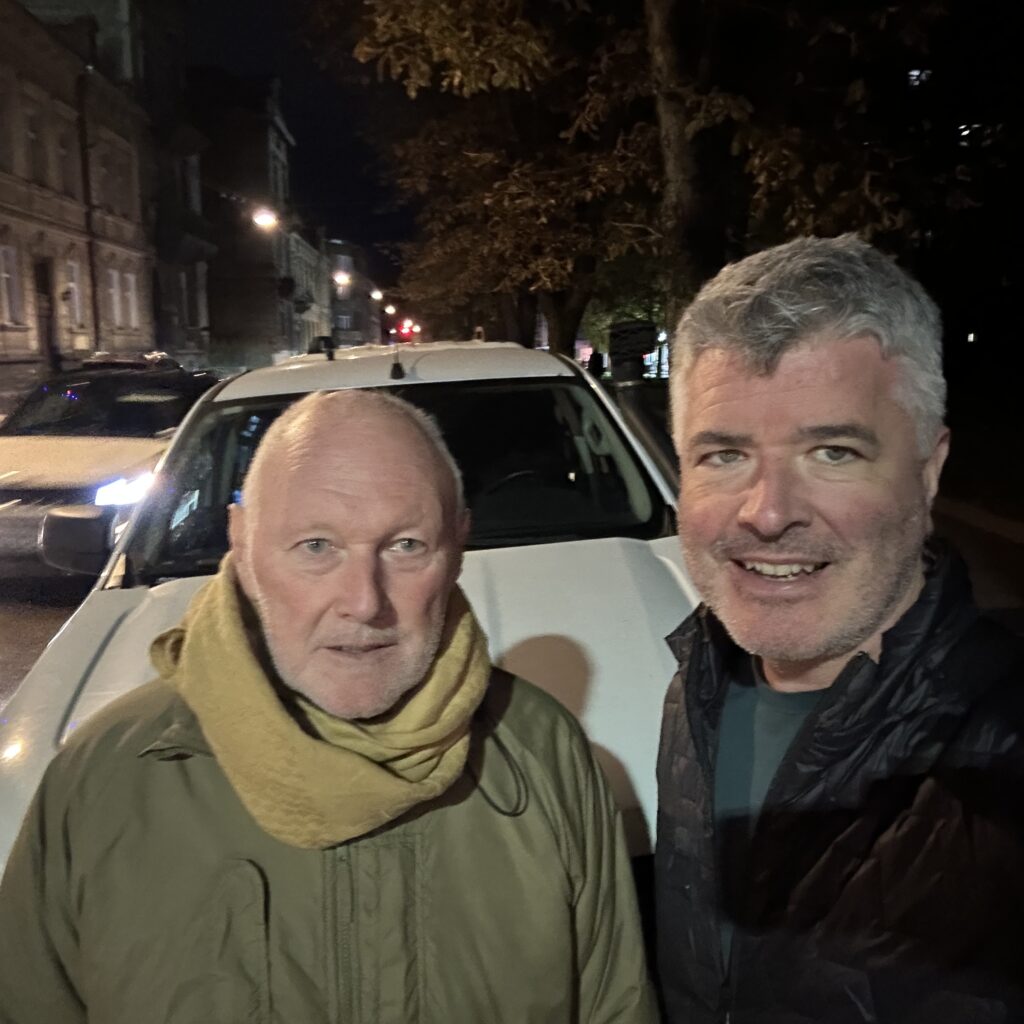
This mission was run in conjunction with Ukraine First an organisation started by David Pond, a former senior naval officer. David and I met each other when we served as Trustees of a police welfare charity and immediately hit it off as we compared our experiences when working in Bosnia. In February 2022 we both found ourselves on the Polish border assisting Ukrainians fleeing the Russian invaders. We have done a number of trips together in Western Ukraine, Kharkiv and the Donbas. David Pond has done many missions and has delivered a number of similar vehicles and as ever it was great to work with someone with the same values, experience, approach to risk and most importantly sense of humour!
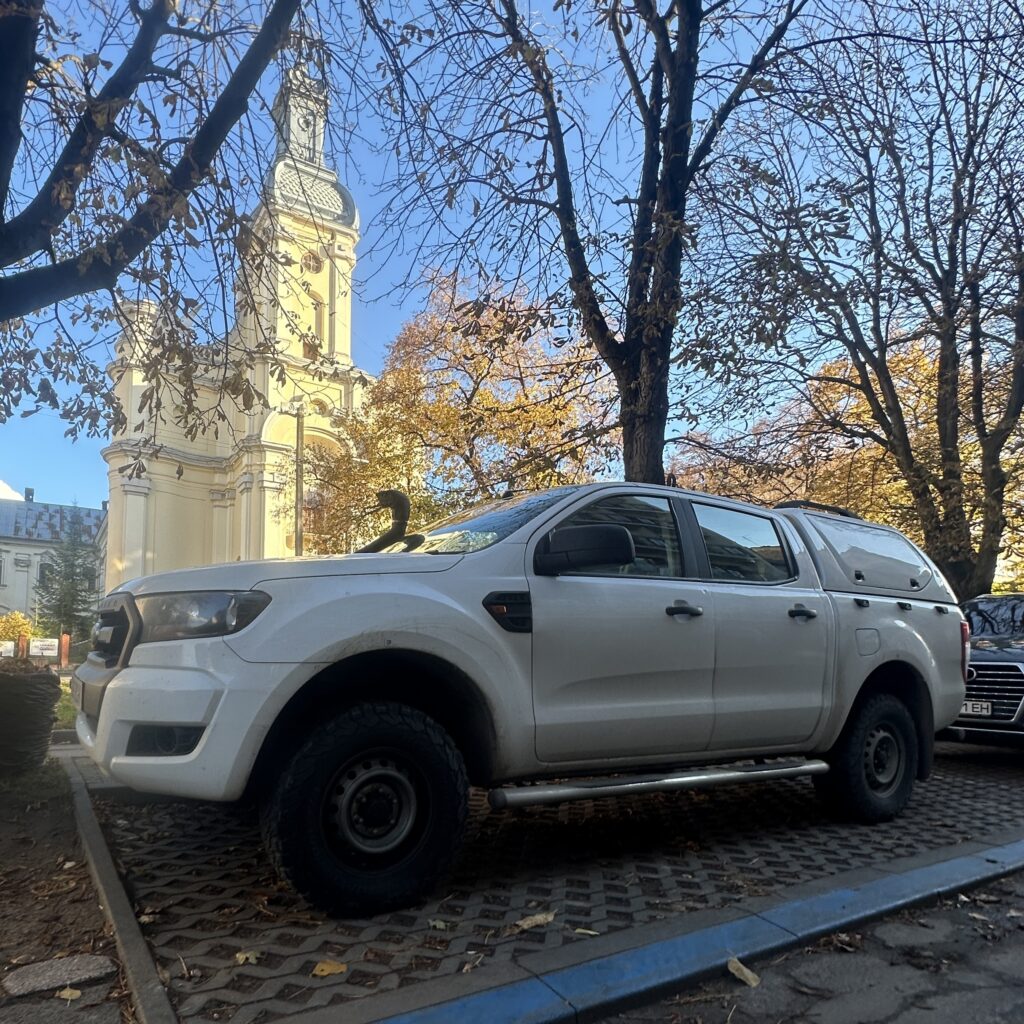
Our primary purpose was to deliver a pick-up truck that had been purchased with a generous donation from an EDA donor and to deliver it to a medical centre in the east of the country. This vehicle had been requested through Ukrainian contacts of David. It had been carefully specced and sourced as there are too many donated ambulances in Ukraine, kindly donated, but not suitable for the appalling roads near front line areas. What is needed are robust 4×4 pickup trucks capable of negotiating the mud and craters of the combat zones. The truck would be used to evacuate the injured to medical stabilisation points prior to their transfer to more established medical hospitals. It would also be used to support the civilian population who defiantly refuse to leave the border areas despite regular Russian raids.
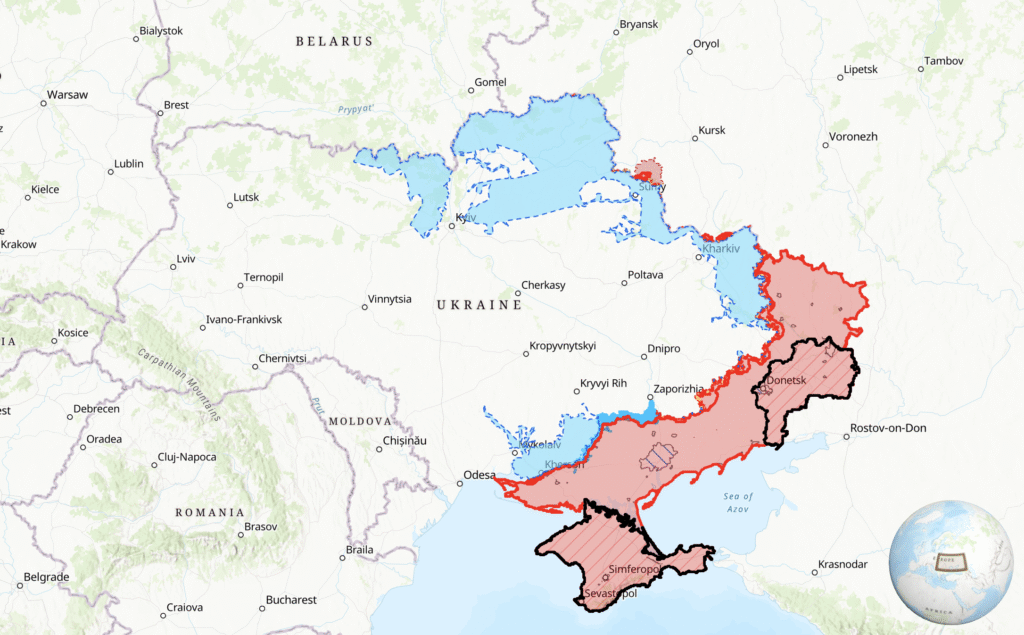
Sumy is the frontline zone in the north.
Its perhaps surprising that so many people do stay with such security uncertainty. But that says more about the alternative of abandoning your home, your history, your memories and being displaced either within Ukriane or abroad- neither are good options.
The existence of a civilian population presents another challenge for many humanitarian agencies- in these “grey zones”, the areas behind the frontlines, only the military operate. The threat of artillery and drones is ever present and so the armed forces perform vital roles including providing medical assistance and support. Conventional ambulances can’t operate here. The military medics do though and they administer medical care to all, even the invading Russian forces. If you want to support civilians, you must do so through the military.
The Drive
The mission was nearly foiled at the first stage thanks to a Ryanair mechanical failure meaning I missed being collected at Stanstead and the ferry from Harwich.
A rapid reorganisation of plans, 3 trains, a few hours sleep at City Airport, some frantic flight booking, an understanding insurance company (thank you Philp Williams and Co) and I managed to meet David in Amsterdam the following morning.
Back on track, we drove across The Netherlands and Germany overnighting In Postram, south west of Berlin. The following day was long as we were once again reminded of the sheer size of Poland, arriving at Sunak, just short of the Ukrainian border.
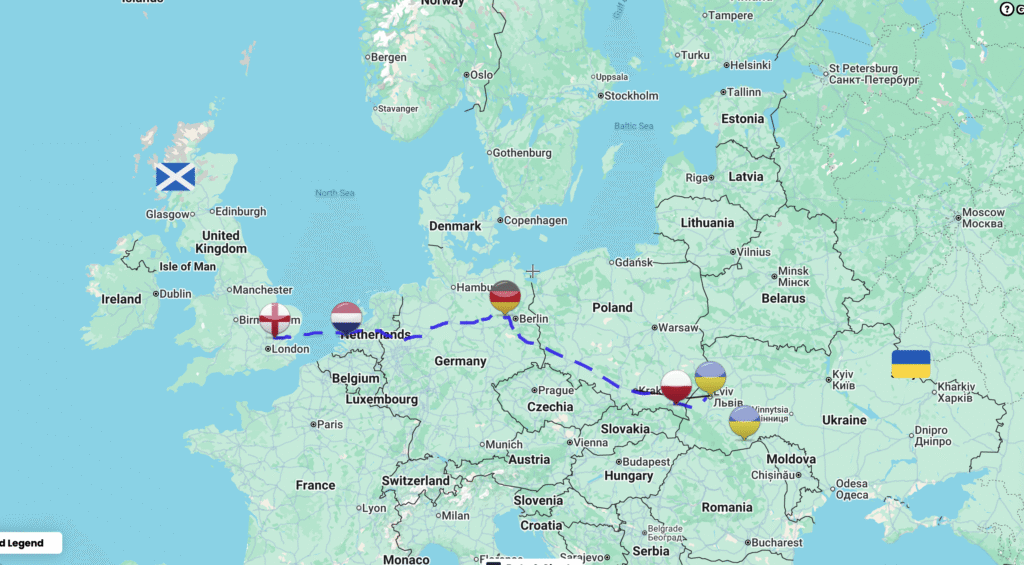
We used the Kroscienko border crossing, quieter than the main Medyka crossing, and started the painful process of trying to leave the EU and enter Ukraine. Unexpectedly, the Poles took our biometrics and fingerprints a timely reminder of the delays we could expect in future crossings thanks to Brexit.
You need to be a particularly type of austere and joyless person to work on a border and have a love of red tape, stamps and forms. Crossing a border into a country under martial law is a nightmare, crossing a border with humanitarian aid is even worse, crossing a border with a car that is humanitarian aid under martial law is next level!
Regulations seem to change constantly and there is no “guide”. It was a surprise to us to be asked for yet another export form for a vehicle that had simply transited the EU from the UK. Brexit again.
Often the best approach is to make yourself a problem, blocking lanes, looking blankly and speaking in a very broad Scottish accent! This worked for us as the only semi-English speaking official turned up to remind us to bring a new form next time. She assured us she didn’t need it this time which begs the question why she needed it at all!
After two hours of hanging around looking blankly and being pointed to random buildings, we were allowed to exit the customs yard with the all important “Get out of Customs Free” pass.
A further 2.5 hours driving through Western Ukraine took us back to the city of Lviv and we swapped our comms out. Both David and I are meticulous when it comes to our communication security. “Burner” SIMs, VPNs and encrypted apps are essential and we are aware that our career backgrounds (Military and Police) could be misunderstood and bring us “unwanted attention”.
It was also the time to activate our air alert apps. Apps that scream at you when there is an aerial threat of missiles or bombs. They usually blare in the middle of the night, when most drone attacks on civilians take place (I cant believe I wrte that so matter of fact) . Lviv was hit a few days before our visit, wiping out a young family. This time, despite the alerts, the skies were mercifully peaceful in Western Ukraine but more senseless deaths were experienced in the ravaged cities of the East.
You can download the Air Raid app from Apple/GooglePlay stores and set it for a region like Kharkiv.
My challenge to you is to give the phone permissions to send critical messages and live with it for 48 hours. If it goes off at night get up and imagine what it would be like having to get clothed and make your way to a shelter, knowing that a missile strike is imminent. If it goes off during the day- imagine what you would do.. where would you take shelter?
This life in Ukraine.
Back In Ukraine
Walking through Lviv is surreal, it is vibrant, bustling and full of….. tourists! But scratch the surface and you find a city who’s services are bursting at the seams, the constant presence of uniformed personnel, the shrines outside offices to employees killed in action, the sandbags and protected statues and churches, and of course the wail of the air raid sirens. I’ve spent a lot of time here and no the city well.
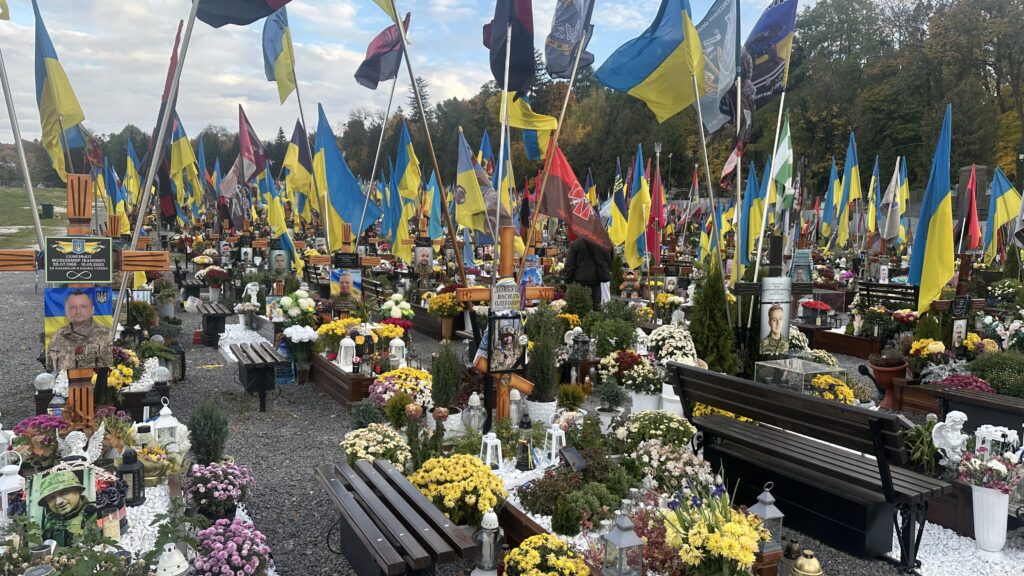
Visiting The military cemetery in Lviv is perhaps the most visual reminder of the War. The scale of it is horrific and it grows 2 bodies a day as more of Lviv’s sons and daughters are laid to rest. The Ukrainian’s don’t release their personnel losses, and from a morale perspective I can see why. But you cannot help but be emotionally impacted by the sight of the graves and the flags. I am not a particularly emotional man but this film took me four attempts to film.
The visit was a salutary reminder of the need for ongoing assistance and it gave some comfort to know that the vehicle we had brought would save lives and save graves.
Ukraine First has a long established relationship with a Lviv orphanage and it was perhaps inevitable that having supported orphanages ourselves, there was some overlap with children we had assisted.
Once again I was blown away by the absolute dedication of staff to the children and the imaginative approaches they are giving them to give them the best starts in life.
Of particular note were the ‘families’ they created. Here orphans were housed in a family home with a “mother” and 7 or 8 “siblings”- other orphaned children and they lived in a supportive family unit where everyone helped out. It was truly inspirational and touching the affection and love the children had for their new siblings. David is returning in December with Christmas presents for the orphans.
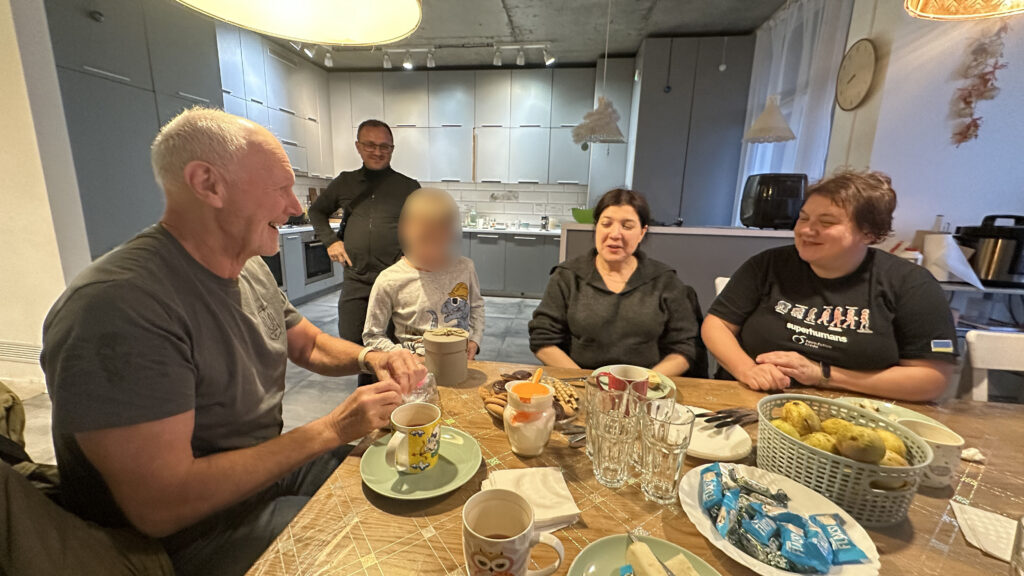
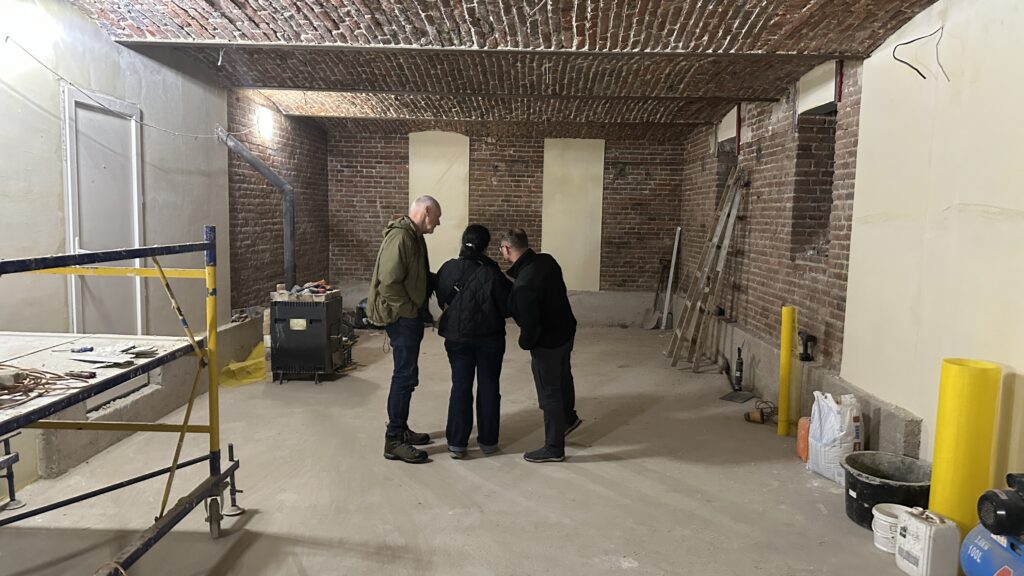
David Ponds Ukraine First Charity also bought windows and learning equipment for a building that is being refurbished into a fresh modern environment for 300 children to utilise. We were proudly shown the orphanages new bomb shelter- yes, just let that sink in the orphanage’s bomb shelter.
One of the reasons for being on the ground in Ukraine is to develop new contacts, assess proposals and to check in on projects. We took this opportunity to visit Chernivitsi, a city in Western Ukraine.
Wars go through different stages and I’ve been in Ukraine at every chapter. The initial migration of women and children fleeing for safety in 2022, the tentative steps of small charities as they established a humanitarian footprint in Ukraine, rebuilding in liberated Kharkiv, the support of orphans through therapeutic services and the targeting of the civilian population with drones and missiles.
Although a long way from the frontlines, Chernivitsi (the most southern marker on my above map) has been home to many IDPs (Internally Displaced Persons) from the East of Ukraine. Like Poland and Germany, the impact on local services of this ballooning in population has caused its own frictions, often its the silliest things- people who cant park their car outside their flat any more because of the influx of IDPs.
We met with the Directors of a local Charity that helped refugees and supplied trauma medial kits. Combat Application Tourniquets are one of the most important pieces of life saving kit in Ukraine for both soldiers and civilians. In the early years of the war prices soared, then cheap Chinese versions began to appear and predictably failed. New standards have been introduced and Ukraine is now producing its own tourniquets in its own factories. These small £12 devices massively increase survival chances in trauma injuries and are carried by soldiers and civilians alike and can be applied to limbs to stop people bleeding to death from injuries from mines, artillery, missiles and drones
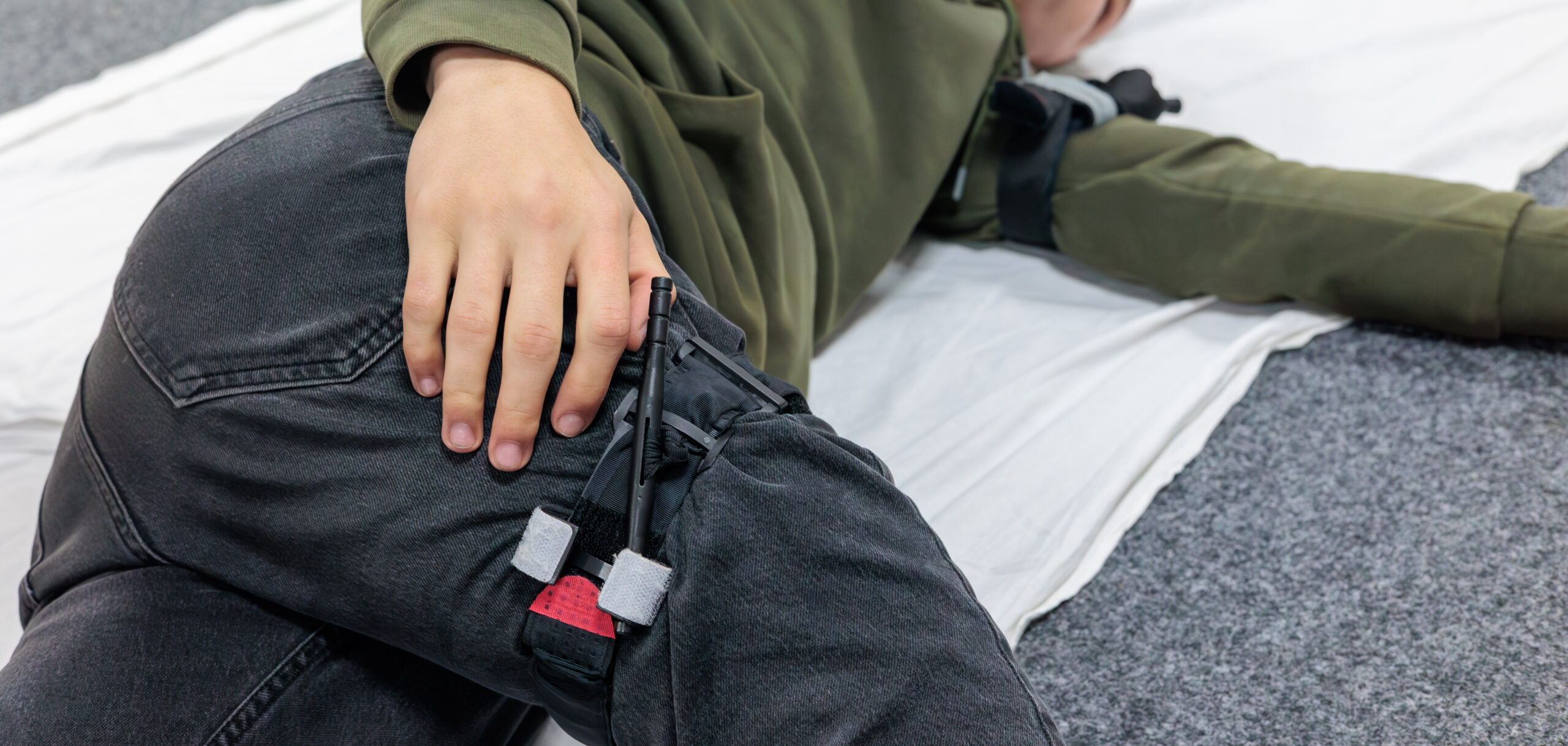
It’s a good example of the importance of visiting, discussing and learning. We will only supply tourniquets that are effective, usable and have transparent and known procurement and supply routes.
We also met with military contacts who told us what life was like on the front lines, the challenges dangers and problems. In some areas men are trapped for weeks unable to leave trenches for fear of being attacked by Russian drones. In some areas, trenchfoot is becoming an issue. So for all the technical advances, have we really progressed that much in warfare in the last century?
We asked many Ukrainians if they would accept a peace deal on the current lines of occupation but, to most, despite being exhausted with war, that wouldn’t be acceptable. “Too many would have died for nothing”, was the common theme. An an understandable distrust of Putin, ‘the Devil’, was universal. We heard more astonishing stories of how Ukrainians were caught entirely by surprise by the invasion. A former resident of Kharkiv told how they were awoken by the orange glow of the burning city coming in through his bedroom window. Hearing how people had to abandon their lives and flee with what they could carry is bad enough, but when you hear the stories of the executions and the terrorising by the invading Russian soldiers, the horror really drives home.
We spoke too with refugees who had returned to Ukraine to check on relatives. It highlighted an extraordinary but problematic issue. Many of the Eastern Ukrainian cities were Russian speaking until the Russian invasion. Since then they have rapidly switched to become Ukrainian speaking. Refugees who left these cities haven’t however lived that linguistic transition and struggle to understand the new language of their home cities. With Ukrainian refugees being culturally left behind, there are obvious problems for future returns and integration.
Work commitments meant I wasn’t going to have time to take the vehicle through to Kyiv, but David and a Ukrainian contact did. So as I joined the 4am night train from Odessa I did so with a feeling of saddness. Reflecting on the cemetery, the challenges for a displaced population, the constant threat from the skies, the orphans and the pressing need for tourniquets to stop people bleeding out, it was hard not to be.
My next projects will focus on what is needed, one of those is purchasing quality tourniquets. If you wish to donate to this project, please contact me for more details on how we can save lives
Thank you for your interest and thank you for your support. Slava Ukraini.